SoftWave gets you unstuck so you can get your life back.
SoftWave Therapy for Knee Pain
Knee pain doesn’t have to be your new normal. Whether you’re dealing with arthritis, a sports injury, or years of wear and tear, SoftWave Therapy offers a non-invasive, drug-free path to real relief. Using advanced acoustic wave technology, SoftWave targets the root cause of your pain by stimulating healing deep within the joint and surrounding tissues — not just masking symptoms. The result is reduced inflammation, improved mobility, and lasting recovery without injections or surgery.
SoftWave can also help with pain and conditions in:
Shoulders & rotator cuff
Hips & hip flexors
Lower back & spine
Feet & plantar fasciitis
Elbows (tennis & golfer’s elbow)
Achilles tendon
Neck & upper back
Hands & wrists
And so much more…
Knee Therapy FAQs:
What causes knee pain that SoftWave can help with?
Knee pain can stem from a variety of conditions including arthritis, tendonitis, ligament strain, meniscus irritation, bursitis, chronic inflammation, and overuse from physical activity. SoftWave Therapy is designed to address the underlying cause of these conditions rather than simply masking the pain.
Can SoftWave help with arthritis in the knee?
Yes. SoftWave Therapy can help with osteoarthritis, degenerative joint changes, and even “bone-on-bone” arthritis symptoms by reducing inflammation and stimulating the body’s natural healing response within the joint.
Can SoftWave help with knee pain from sports or overuse?
Absolutely. SoftWave is well-suited for conditions like runner’s knee, patellar tendonitis, jumper’s knee, and knee pain caused by repetitive movement or fitness activity.
What does SoftWave Therapy do for the knee specifically?
SoftWave uses acoustic wave technology to penetrate deep into the knee joint and surrounding tissue. It promotes blood flow to damaged areas, reduces inflammation, improves joint mobility, and activates the body’s natural healing process — all without injections or surgery.
Can SoftWave help after knee surgery?
Yes. SoftWave Therapy can help address lingering discomfort, stiffness, and limited range of motion that sometimes persists after a surgical procedure on the knee.
Will SoftWave Therapy improve my knee mobility?
Many patients experience improved joint function and range of motion as a result of SoftWave treatment. By reducing inflammation and supporting tissue healing, SoftWave works to restore movement that knee pain may have taken away.
Do I have to try other treatments before considering SoftWave?
No. SoftWave Therapy is a strong first-line option for knee pain because it is non-invasive, drug-free, and targets the root cause of pain. It is also a great option for those who have tried other treatments without finding lasting relief.
Increases Stronger Blood Flow
Decreases Inflammation in the Body
Stimulates Stem Cells Activity
Repairs and Regenerates Tissue
Accelerates Wound Healing
Reduces Acute and Chronic Pain
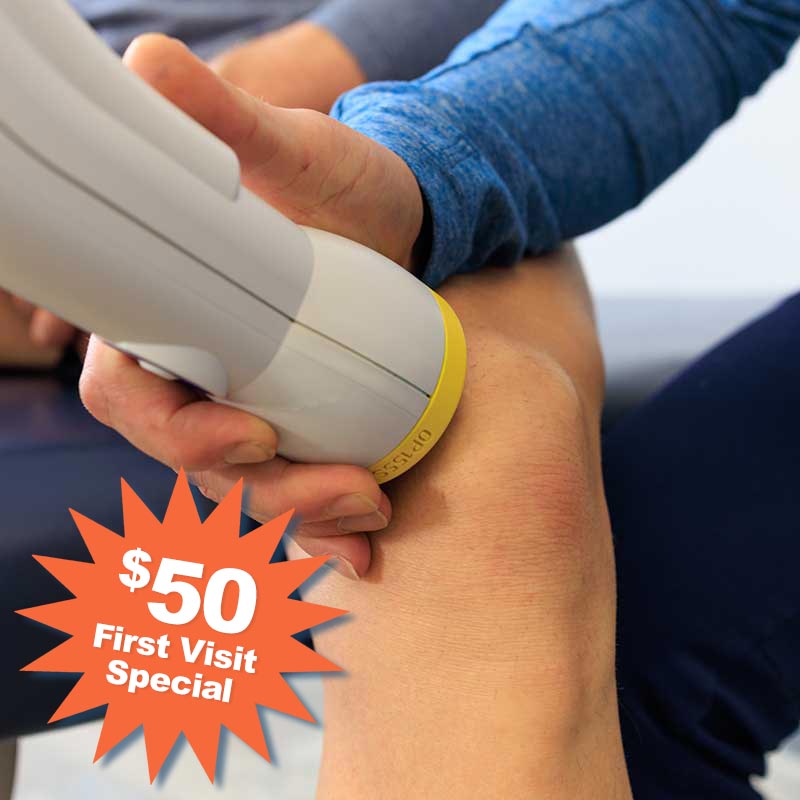
$50 First Visit Special. Try Softwave today.
What You Can Expect
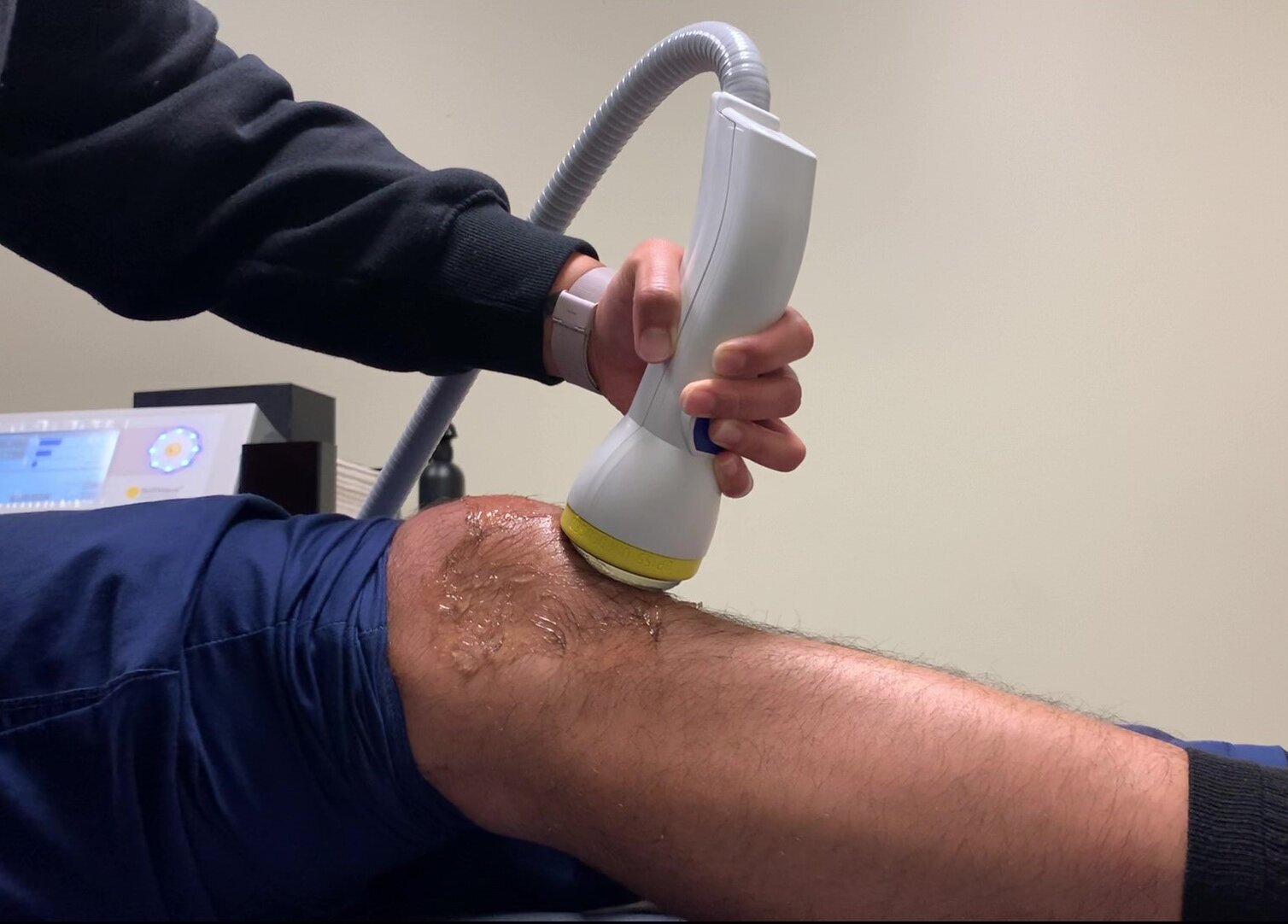
The procedure averages 10-15 minutes but may be longer depending on treatment areas and diagnosis. A gel is applied to the surface area to be treated. The applicator produces pulses as the clinician moves around the treatment area. During therapy, communication with the provider is necessary to identify treatment areas and monitor progress.
Advanced technology helps more patients by successfully turning on the body’s natural healing process.